
The Vagus Nerve: Your Body's Pathway to Healing from Trauma
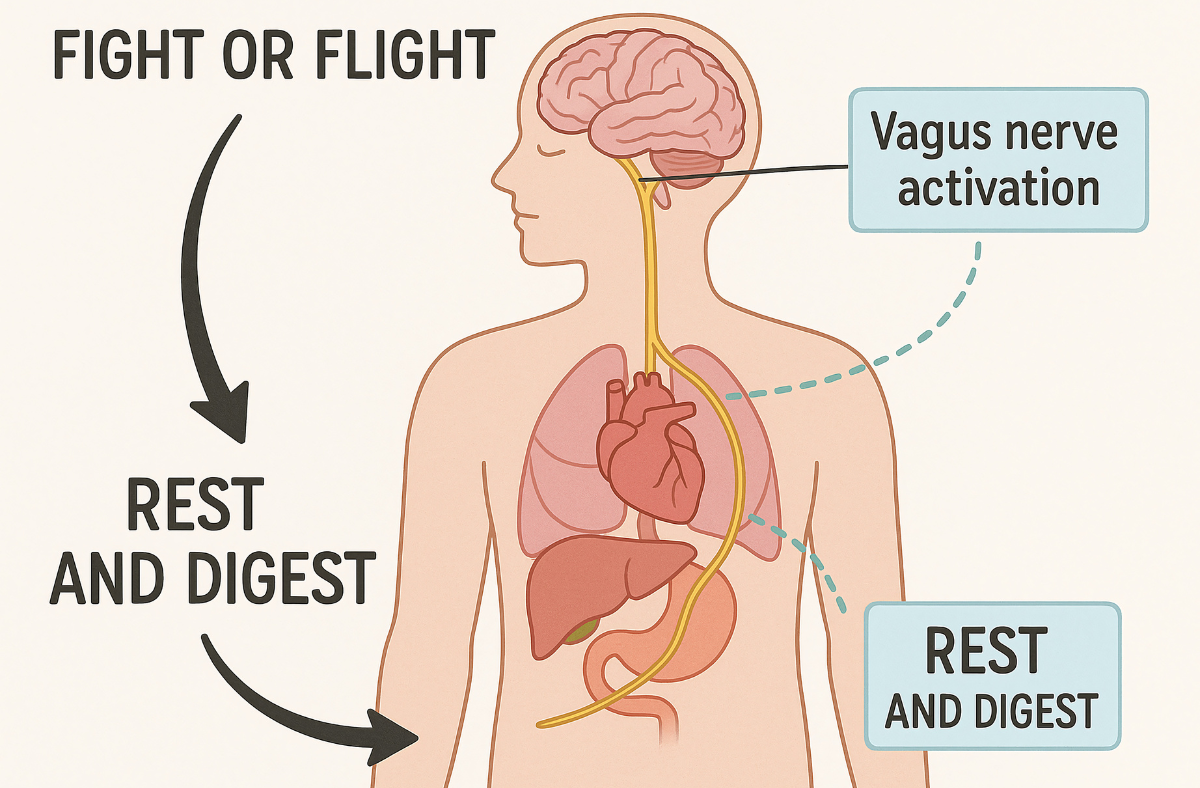
Inside your body runs a remarkable communication highway connecting your brain to nearly every major organ—the vagus nerve.
This wandering nerve, whose name literally means "wanderer" in Latin, plays a crucial role in regulating your stress response, digestion, heart rate, and immune system. When trauma occurs, it can significantly impact how this nerve functions, often leaving people stuck in states of hypervigilance, anxiety, or emotional numbness long after the traumatic event has passed. Understanding the vagus nerve's role in trauma can illuminate why healing sometimes feels so difficult and why certain therapeutic approaches prove particularly effective.
Your Body’s Natural Healing
More importantly, it reveals pathways to recovery that engage your body's natural healing mechanisms. The vagus nerve serves as the main component of your parasympathetic nervous system—the part responsible for "rest and digest" responses that help you feel calm and safe. When functioning well, your vagus nerve helps you shift smoothly between states of activation when you need to respond to challenges and states of calm when danger has passed. This flexibility, called vagal tone, reflects your nervous system's resilience.
How Trauma Can Effect the Vagus Nerve
Trauma can reprogram the vagus nerve, making it overly sensitive to perceived threats. After experiencing trauma, your nervous system may become stuck in protective modes—fight, flight, or freeze—even when you're objectively safe. The vagus nerve's usual ability to signal safety to your body becomes impaired, leading to persistent activation of your sympathetic nervous system. This manifests as constant vigilance, difficulty relaxing, racing thoughts, or feeling perpetually on edge. The effects extend beyond emotional symptoms. Because the vagus nerve connects to so many body systems, trauma's impact appears in physical ways too. You might experience digestive issues, heart palpitations, difficulty sleeping, chronic pain, dizziness, or unexplained nausea. These aren't "just in your head"—they're real physical manifestations of a dysregulated nervous system struggling to find equilibrium.
What Happens After Trauma
The orienting reflex, mediated by the vagus nerve, becomes hyperactive after trauma. This reflex normally helps you assess your environment for threats. But when overactive, it creates exaggerated startle responses to neutral stimuli—loud noises, sudden movements, or anything that remotely resembles the original trauma can trigger a full-body alarm response. You might feel exhausted from your nervous system's constant state of high alert. The encouraging news is that vagal tone can be strengthened, helping restore balance to your nervous system.
What Helps
One of the most accessible tools is intentional breathing. Deep, slow diaphragmatic breathing directly stimulates the vagus nerve, activating your parasympathetic nervous system. Try breathing in slowly through your nose for a count of four, allowing your belly to expand. Then exhale slowly through your mouth for a count of six or eight. The longer exhale is key—it signals safety to your nervous system. Practicing this for just a few minutes daily can create measurable improvements in vagal tone. Movement and body-based practices also support vagus nerve regulation. Gentle yoga, tai chi, and mindfulness-based stress reduction (MBSR) help your nervous system learn that movement can occur without danger. These practices combine breath work, physical sensation awareness, and gradual exposure to activation in safe contexts, teaching your body new patterns of response.
New Research
Emerging research on Vagus Nerve Stimulation (VNS) shows promise for trauma recovery. While some VNS approaches involve implantable devices typically used for conditions like epilepsy or depression, non-invasive techniques are also being explored. Therapeutic approaches that understand the mind-body connection prove particularly effective for trauma healing. EMDR (Eye Movement Desensitization and Reprocessing) helps the brain process traumatic memories while monitoring body sensations. Cognitive Behavioral Therapy can be enhanced when combined with awareness of nervous system states. Trauma-informed therapy recognizes that healing happens not just through talking about experiences but through helping your body learn that the danger has passed. The concept of vagal tone—your heart's ability to quickly calm down after stress—becomes a useful measure of healing progress. As you strengthen your vagal tone through these practices, you may notice increased resilience to stress, improved ability to relax, better sleep, enhanced emotional regulation, and reduced physical symptoms.
Healing Is Possible
Healing from trauma is a journey that honors both mind and body. Understanding your vagus nerve's role in this process provides a roadmap for recovery, revealing why certain practices work and offering hope that change is possible. Understanding the mind-body connection in trauma is the first step toward healing. Our trauma-informed therapists specialize in approaches like EMDR and somatic techniques that support nervous system regulation. Contact Us today to begin your healing journey.